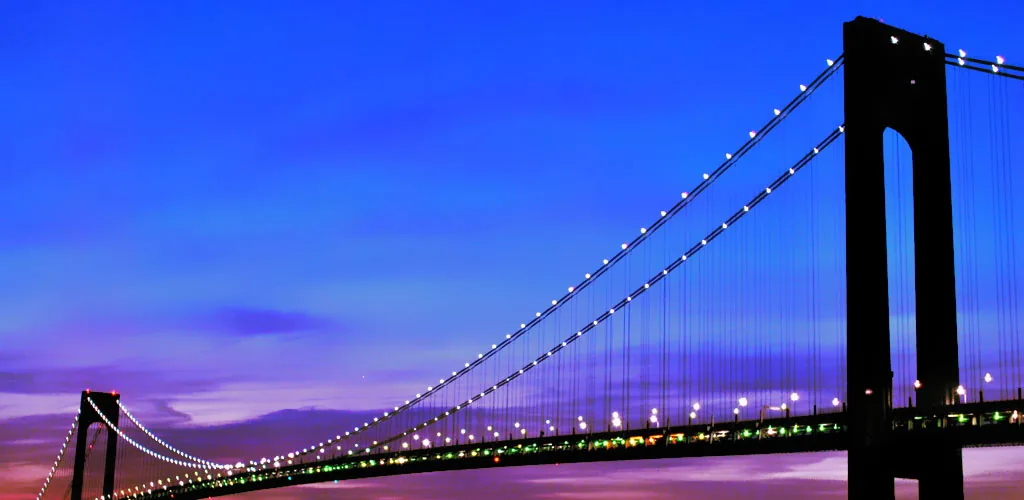
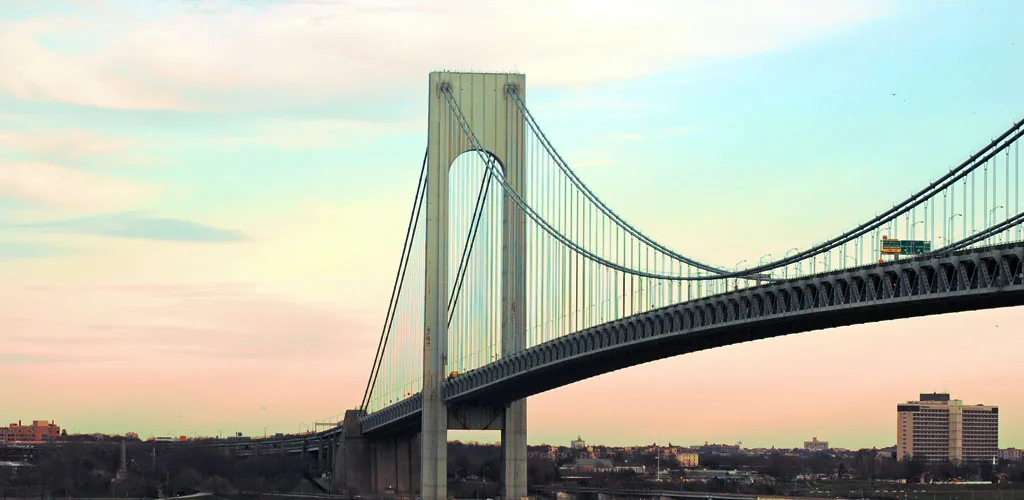
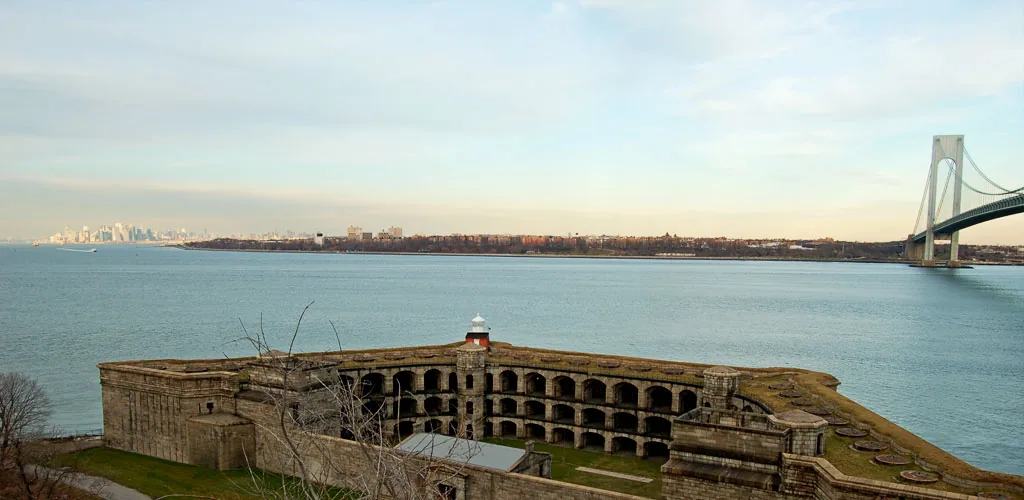
How do I get between Staten Island and Brooklyn while the marathon closes the bridge?
By road you go round: there is no direct crossing for nine hours, and every Staten Island–Brooklyn trip becomes a loop through New Jersey. On foot you take the ferry. The alternative crossings keep running all morning, with a different toll at each.
The road detours
Goethals Bridge (I-278) connects the Howland Hook end of Staten Island with Elizabeth, New Jersey, and from there the New Jersey Turnpike and I-95 run north to the Holland Tunnel, the Lincoln Tunnel and the George Washington Bridge. It is the shortest way round for anyone starting on the Staten Island Expressway.
Outerbridge Crossing (NY/NJ 440) links Charleston at the south end of Staten Island with Perth Amboy, New Jersey, and suits anyone coming from the southern half of the island. Both are Port Authority crossings and both charge the same rates.
Hugh L. Carey Tunnel connects Brooklyn with Lower Manhattan. It does not reach Staten Island, so it is the answer for a Brooklyn–Manhattan trip on race morning rather than for Brooklyn–Staten Island.
What each crossing costs
| Crossing | Vehicle | E-ZPass | Mid-tier | Tolls by Mail |
|---|---|---|---|---|
| Hugh L. Carey Tunnel | Car | USD 7.46 | USD 9.79 | USD 12.03 |
| Queens Midtown Tunnel | Car | USD 7.46 | USD 9.79 | USD 12.03 |
| Goethals Bridge | Car (class 1) | USD 14.79 off-peak USD 16.79 peak | USD 19.55 | USD 23.30 |
| Outerbridge Crossing | Car (class 1) | USD 14.79 off-peak USD 16.79 peak | USD 19.55 | USD 23.30 |
| Staten Island Ferry | Foot passenger or bicycle | Free | ||
| Subway or local bus | Per ride | USD 3.00 (express bus USD 7.25) | ||
The Port Authority collects its toll entering New York only, so a there-and-back trip over the Goethals or the Outerbridge pays twice: USD 29.58 off-peak or USD 33.58 peak. The Verrazzano-Narrows is charged in both directions at USD 7.46 with a New York E-ZPass, which is the rate that applies again from 4:00 p.m. The full rate grid for the closed bridge is on the toll page.
The ferry
The Staten Island Ferry is free, carries foot passengers and bicycles but no cars, and takes about 25 minutes between Whitehall in Manhattan and St George on Staten Island. On weekends it leaves Whitehall every 30 minutes, on the hour and the half hour, right through the morning. At St George you are on the island, with buses and the Staten Island Railway from the terminal; on marathon morning race shuttle buses also run from the terminal to School Road at Bay Street. Timetables and terminals are on the Staten Island Ferry schedule guide.
The buses
MTA diverts buses across the city on race day: the Central Park transverses at 65th, 79th and 96th Streets close for most of the day, buses are not allowed to cross Fifth Avenue during the race, and further diversions run along the marathon route across the city. The S79-SBS, the route that normally runs over the Verrazzano-Narrows between the Staten Island Mall and Bay Ridge, has no open bridge to use while the closure is on. Route-by-route changes are published at mta.info/alerts.
The subway
No subway line crosses the harbour, so the underground is a way to each end of the trip rather than across it. On the Brooklyn side the R runs to Bay Ridge, under the course on Fourth Avenue; on the Manhattan side the subway serves South Ferry, Whitehall Street and Bowling Green, all a short walk from the ferry terminal. A ride is USD 3.00.
Timing your morning
Two useful cut-offs. The bridge is open as normal until 11:00 p.m. on the Saturday night, when the upper level closes, and the lower level carries traffic until 7:00 a.m. on the Sunday. After that, nothing crosses by road until about 4:00 p.m. The closure clock in full is on the marathon-day closure timetable, and whether you can walk or ride across is on walking and cycling on race day.